GFCI / AFCI Code Compliance
GFCI, AFCI, bonding, and grounding retrofits to bring older Utah homes up to current NEC code for refi, sale, or insurance requirements.
GFCI, AFCI, bonding, and grounding retrofits bringing older Utah homes up to current NEC
Code evolves, and older homes rarely get updated along the way. Where NEC 2023 requires GFCI protection in a kitchen or AFCI protection in a bedroom, a lot of 1980s and 1990s Utah homes have neither. We do targeted retrofits — adding protection where today's code requires it, improving the grounding electrode system, and fixing bonding gaps around water lines, gas lines, and panels.
This is the kind of work that doesn't usually look like much from outside the panel, but it's the single biggest safety upgrade most older homes can get. Insurance inspectors, home inspectors on a sale, or a city inspector during a remodel will catch these items — we'd rather you catch them on your own terms.
The two code articles that drive most of this work are NEC 210.8 (GFCI protection) and NEC 210.12 (AFCI protection). GFCI zones under NEC 210.8 include bathrooms, kitchens (every counter receptacle plus anything within six feet of a sink), outdoor receptacles, garages, basements, laundry areas, and anywhere within six feet of a water source. AFCI zones under NEC 210.12 now cover nearly all 120V 15A and 20A circuits in dwelling units — bedrooms, living rooms, dining, halls, closets, kitchens, laundry, and more. If your home was built or last updated before 2017, you're likely missing a significant chunk of this.
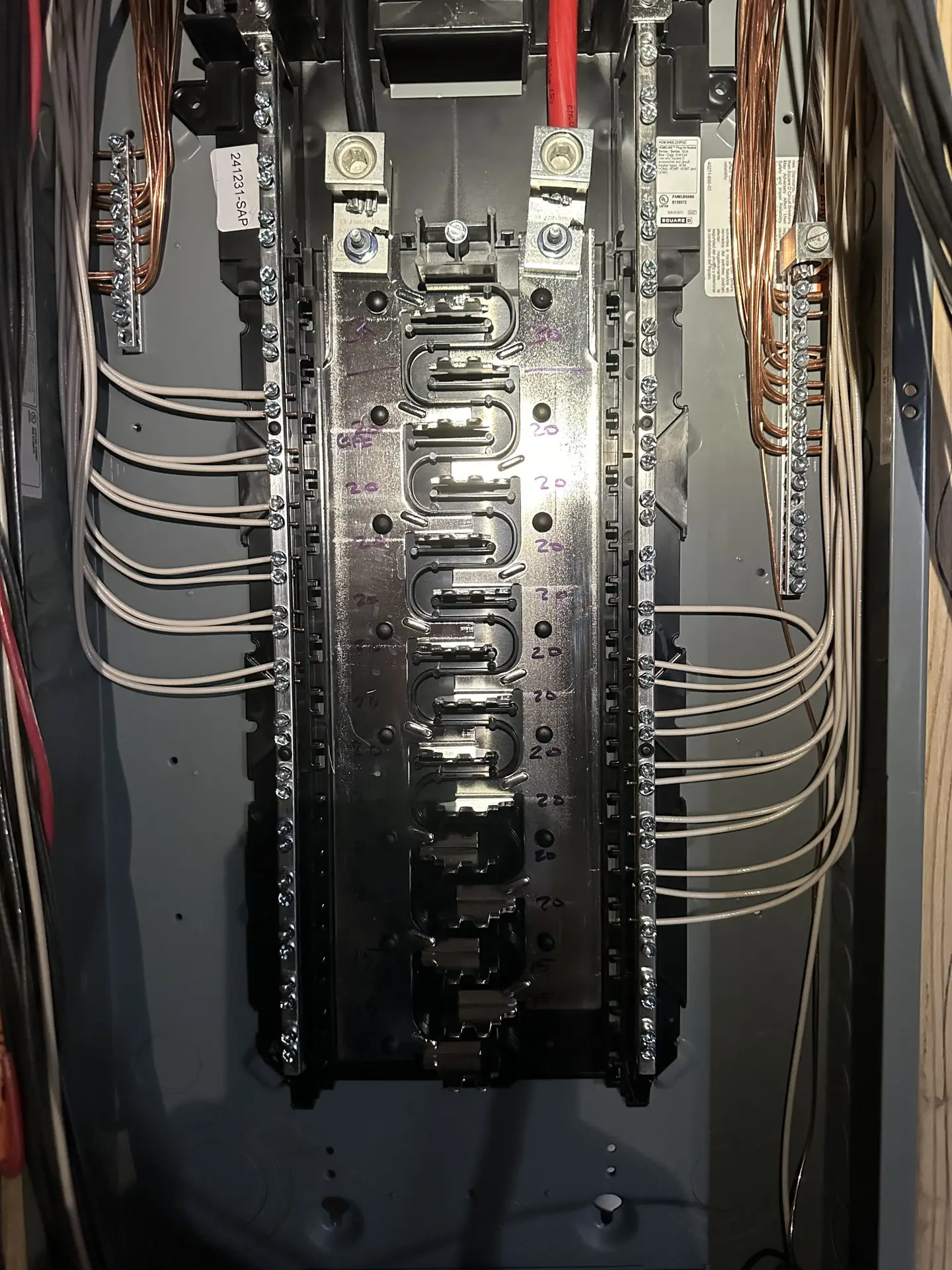
Grounding and bonding is the quieter half of code compliance. NEC 250 requires a complete grounding electrode system — typically two ground rods driven at least six feet apart and bonded together, plus a bond to the metal water pipe within five feet of entry, plus intersystem bonding for cable, phone, and future solar. We see 1960s-1990s homes across the Salt Lake Valley and Utah County where one or more of those are missing or disconnected. Also common: a water heater or softener replacement that broke the water pipe bond and nobody put it back.
Caddis is a small Springville-based shop, and we treat code compliance as educator work. We'll explain what the inspector will ask about, what's optional, and what's genuinely a safety issue. If it's cheap and makes you safer, we recommend it. If it's expensive and only marginal, we'll say that too. Nobody gets scared into a scope they don't need.
Signs it’s time.
Home inspection flagged missing GFCI or AFCI protection
Common finding on homes built before the mid-2000s. We retrofit protection in the required rooms — bathroom, kitchen, outdoor, garage, bedroom circuits.
You're selling and want to clear the easy items up front
GFCI and bonding items are inexpensive relative to the deal and almost always come up. Clearing them pre-listing avoids last-minute negotiation.
Water heater, water softener, or gas line was replaced
Each one disrupts bonding paths that most homeowners don't realize exist. We re-establish bonding and verify grounding is intact.
You've got a two-prong outlet in a kitchen or bath
Two-prong outlets in wet locations are a code and safety problem. We retrofit GFCI protection even on circuits without an equipment grounding conductor.
Our process, step by step.
No mystery, no sales games. Here’s exactly what happens from the first phone call to the final inspection.
Full home electrical audit
We walk the home with a checklist based on NEC 210.8 (GFCI zones), 210.12 (AFCI zones), 250 (grounding and bonding), and other common retrofit items. We document what's missing room by room, note access challenges, and photograph the panel.
Prioritized recommendation list
You get a written list sorted by priority: active safety issues (two-prong outlets in wet locations, no bonding on water line) first, then insurance-flagged items, then code-current-but-not-urgent items. You pick what to do now vs. later; we don't blanket-quote the whole thing if you don't want to do it all at once.
Permit if required
Smaller retrofits (swapping a few receptacles) often don't need a permit; larger scopes (adding AFCI breakers across multiple circuits, grounding system work) do. We pull permits when required and skip them when they're not — we'll tell you which bucket you're in.
GFCI retrofits in wet locations
First priority is usually shock protection in bathrooms, kitchens, outdoor, garage, basement, and laundry. We choose receptacle-based or breaker-based per circuit based on accessibility, panel capacity, and cost. Two-prong outlets get GFCI receptacles with "No Equipment Ground" labels where that's the right call.
AFCI retrofits in living spaces
Next pass is AFCI protection in bedrooms, living areas, hallways, closets, and dining. These typically land as breaker swaps in the panel rather than receptacle swaps, because AFCI receptacles are expensive and often harder to find in the right configurations.
Grounding and bonding sweep
We check the grounding electrode system — rod count, bonding between rods, water pipe bond within five feet of entry, gas line bond if required, intersystem bond for cable and phone. Anything missing gets added. If your water heater or softener was recently replaced, we re-establish the bond that was probably broken during swap.
Documentation handoff
You get a written report of what was done, where, and why — organized by room and by code article. This is what we send to insurance carriers, hand to real estate agents during a sale, or keep in your home file for the next inspection.
Our scope for this job.
- GFCI retrofits in bathrooms, kitchens, laundry, outdoor, garage, basement, and other wet locations
- AFCI retrofits in bedrooms, living areas, hallways, closets, and dining rooms per NEC 210.12
- Breaker-based (panel) protection vs. receptacle-based protection, chosen for your situation
- Grounding electrode system verification and ground rod additions where undersized
- Water line, gas line, and intersystem bonding brought to current code
- Replacement of ungrounded two-prong outlets with GFCI protection and proper labeling
- Written report of what was done and where, for inspectors and insurers
What people ask about code compliance.
Should I use GFCI breakers or GFCI outlets?
Both work. GFCI outlets are usually cheaper per circuit and let you reset without going to the panel. GFCI breakers protect the whole circuit from the panel forward and are often the right call when the first device on a circuit isn't easily accessible. We pick per circuit — not one blanket answer.
What rooms actually require AFCI in Utah?
Under NEC 2023 (which Utah has adopted), AFCI protection is required on nearly all 120V, 15A and 20A circuits in dwelling units — bedrooms, living rooms, dining rooms, hallways, closets, kitchens, laundry, family rooms, and more. The exceptions are small. For most older homes, we focus retrofits on bedrooms and living spaces first, which is where the code change hit hardest.
Can I retrofit GFCI on a two-prong outlet with no ground wire?
Yes — NEC specifically allows a GFCI receptacle to replace a two-prong outlet on an ungrounded circuit, as long as it's labeled "No Equipment Ground." It gives you shock protection without having to pull a new ground wire through finished walls. We handle this all the time in older homes.
How much does a code compliance retrofit run?
It scales with how many circuits need protection, whether we go receptacle-based or breaker-based, and whether we're also addressing grounding and bonding gaps. We walk the house, inventory what's missing, and quote per item — you'll see exactly what you're paying for.
Do I have to do all of this at once?
No. If something is actively unsafe we'll say so, but most of the time we help you prioritize: shock-prone wet locations first (GFCI), then AFCI in sleeping areas, then bonding and grounding. We're happy to phase a retrofit if that's what makes sense for your budget.
If my home was built to code when it was built, why do I need to update it?
You don't legally have to — existing wiring is "grandfathered" and can stay as-is unless you touch it. The reasons to update are real-world: insurance underwriting, home sale negotiations, and actual safety. GFCI and AFCI exist because they prevent specific injuries and fires that the older code didn't address. Nobody will force you, but we'd recommend most of it anyway.
What's the difference between a GFCI and an AFCI, in plain English?
GFCI (ground fault) protects people from electric shock — it trips in a fraction of a second when it sees current leaking somewhere it shouldn't (like through you to ground). AFCI (arc fault) protects buildings from fire — it detects the signature of a dangerous arc in damaged wiring and trips before the arc ignites the surrounding materials. They do completely different jobs; many kitchen and laundry circuits now need both, which is why dual-function breakers exist.
My GFCI keeps tripping — is it broken, or is something wrong?
Usually something is wrong — a GFCI tripping means it detected a ground fault, which is literally its job. Common causes: a bad appliance (microwave going bad, outdoor light fixture with water in it), moisture in an outdoor box, or wiring on the load side with a nicked conductor. Occasionally the GFCI device itself fails. We troubleshoot in that order — don't just keep resetting it.
Do I need to replace my old grounding rod when I update the panel?
Not necessarily, but we always check it. Current NEC requires two ground rods driven at least six feet apart and bonded together unless a single rod can be proven to meet a 25-ohm resistance test (which almost nothing passes). Most homes built before the 2000s have only one rod — we drive a second one and bond it in when we're already on-site.
Does code compliance work come with a warranty?
Our workmanship is warrantied — if a device we installed fails or a connection we made loosens, we come back and fix it. GFCI and AFCI devices themselves have manufacturer warranties, typically a few years, and we'll register them when we install if there's a registration path.
We serve Salt Lake County, Utah County, Wasatch County, Davis County from our Springville base. See all service areas →
Other things we handle.

Need an electrician for your Utah home?
Panel upgrades, EV chargers, generators, aluminum wiring, remodels, and everything in between — from a licensed, family-run team that takes the time to explain what we’re doing.