EV Charger Installation
Residential and workplace Level 2 (240V) EV charger installations across the Wasatch Front. NEC 625 compliant, permit-pulled, load-calculated for your actual panel capacity.
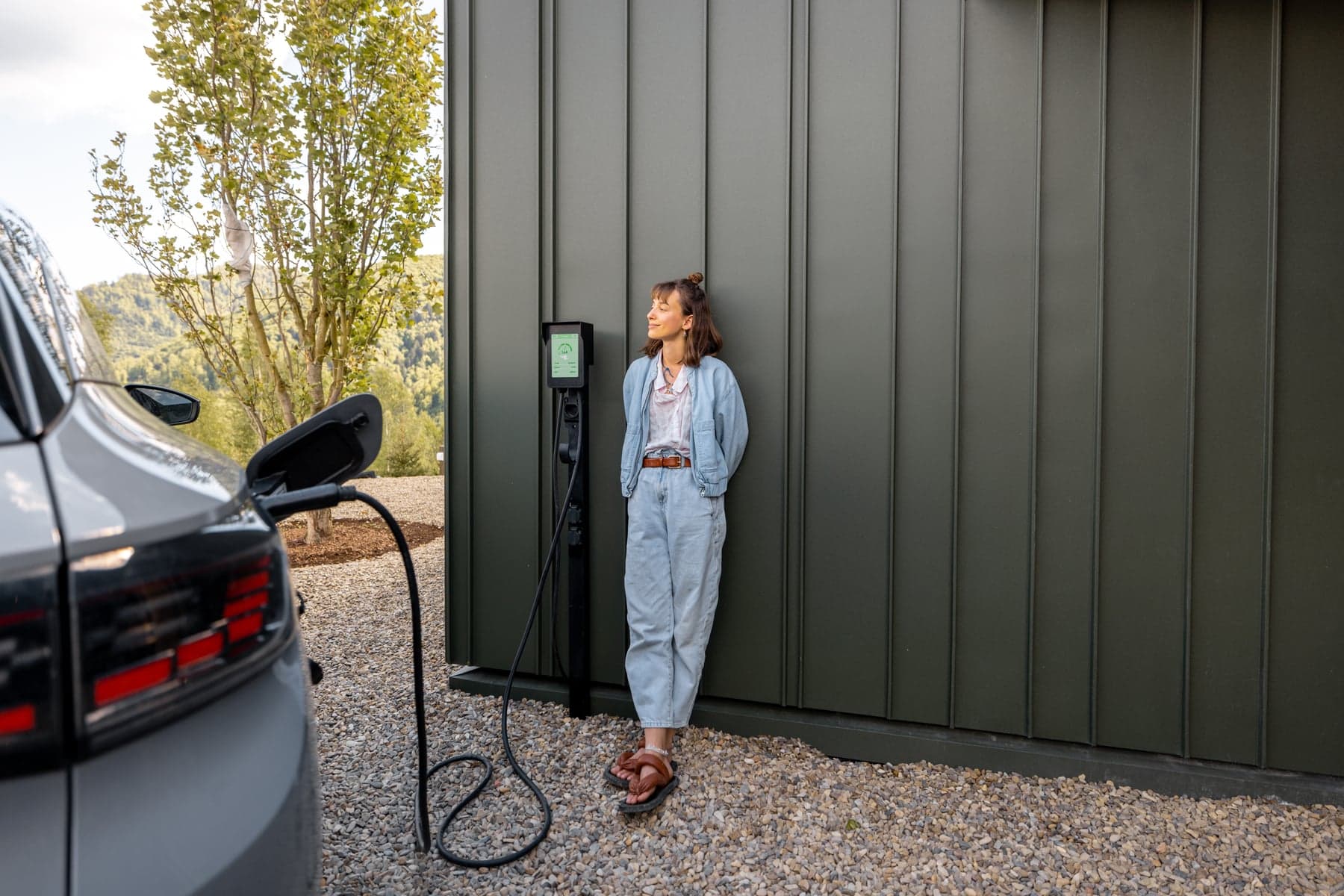
Level 2 (240V) EV charger installs for Utah homes and small workplaces
A Level 2 charger turns an overnight charge from "I hope it's enough" into "it's always full by morning." We install Tesla Wall Connectors, ChargePoint Home Flex, Grizzl-E, JuiceBox, Wallbox, and Enel X JuiceBox units — hardwired or on a NEMA 14-50 outlet, depending on what the manufacturer recommends and how your panel is laid out.
Before we quote, we do a quick load calculation on your panel per NEC Article 625. On a lot of older 100A services across Provo, Orem, and the older parts of Salt Lake City, there's not enough headroom for a 48A charger without either a panel upgrade or a load-management setup. We'll tell you honestly which path makes sense — we'd rather talk you into the right fix than sell you the wrong one.
Conduit routing is often where the quote actually gets written. A short run from a panel in an attached garage to a charger on the opposite wall is one price. A long run from an interior panel through finished basement ceilings, up through a crawl space, and out to a detached garage is a very different conversation. We walk the route, talk through surface-mounted conduit (fastest, visible) versus in-wall (clean look, more labor), and let you pick.
Permits are not optional. Every city in our service area — American Fork, Lehi, Draper, Herriman, Heber, Bountiful, all of them — treats a 240V charger install as permitted work. A lot of Rocky Mountain Power and automaker rebates specifically require proof of permit and inspection to pay out. We pull the permit, schedule the inspection, and hand you the paperwork at the end so there's no scrambling if a rebate asks for it later.
If you haven't picked a charger yet, we're happy to walk through the options. Tesla Wall Connectors are the right call if you're a Tesla household and want the cleanest-looking install. ChargePoint Home Flex and JuiceBox are the most popular "everything else" chargers because they handle any J1772 or NACS vehicle and have solid apps. Grizzl-E is the ruggedized Canadian unit people love for garages that get cold. We'll help you buy once, cry once.
Signs it’s time.
You just bought (or ordered) an EV
Charging on a 120V outlet works for a short commuter, but most families outgrow it within a month. Getting Level 2 in before the car arrives means no scrambling.
You're adding a second EV to the household
Two chargers on a single-family service usually means a load calculation and often a panel upgrade or a smart load-management charger. We'll size it right.
A dealership or utility rebate requires a licensed install
Rocky Mountain Power and some automaker rebates require permits and a licensed electrician's documentation. We handle the paperwork.
Workplace or small-fleet charging
Dentist offices, small shops, and franchise locations adding one or two chargers for staff or customers. We coordinate with your landlord and the city on permits.
Our process, step by step.
No mystery, no sales games. Here’s exactly what happens from the first phone call to the final inspection.
Quick phone or in-person consult
Tell us your car (or the one you're ordering), where you want the charger, and roughly where your panel is. For simple garages we can often quote off a few photos; for complex runs or detached garages we come walk it.
Panel capacity and NEC 625 load calc
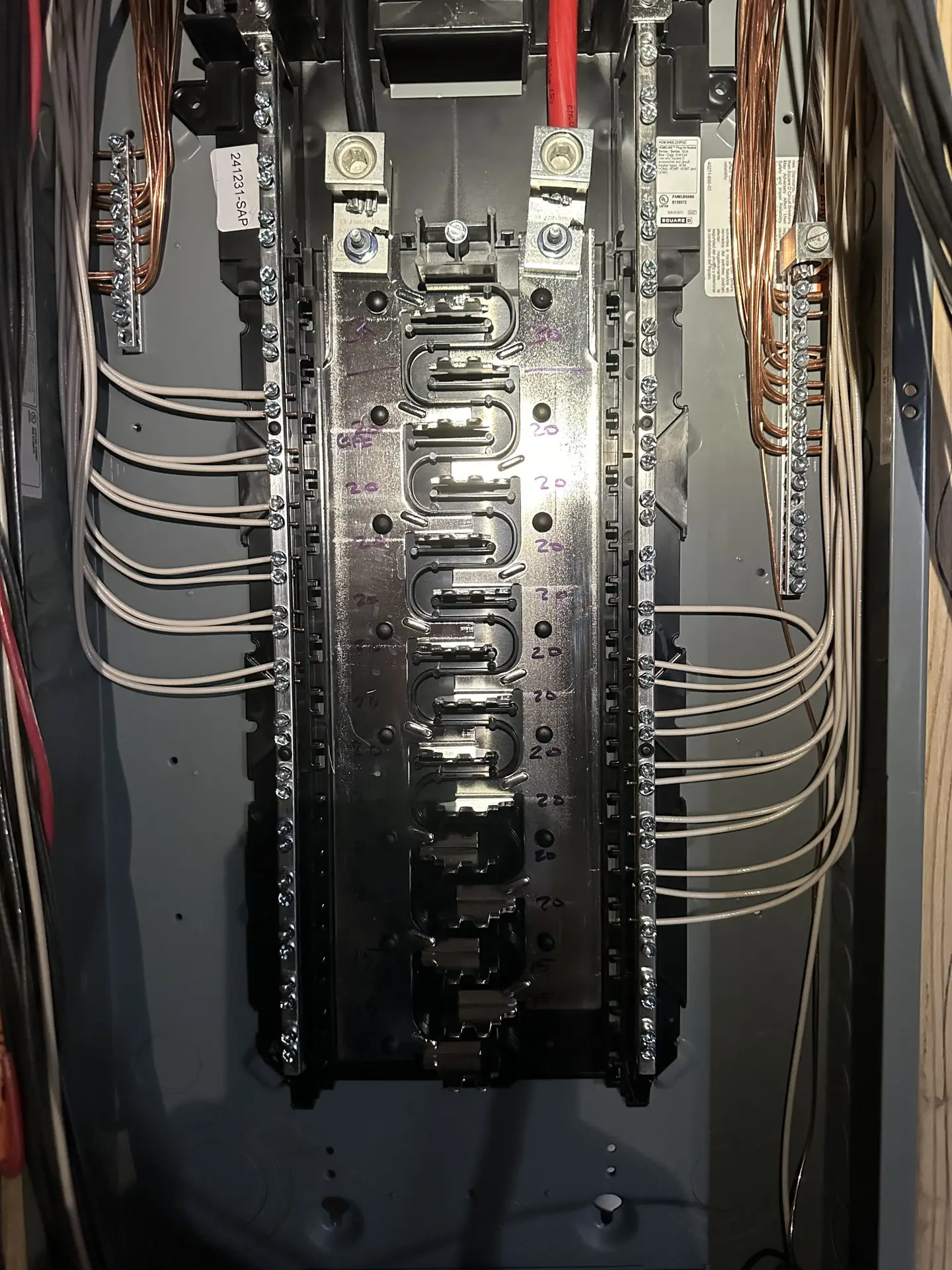
We open the panel, check the main breaker rating, inventory existing loads (range, dryer, AC, water heater, hot tub, other EVs), and run the load calc. This tells us whether you can add 40A or 48A straight, need a load-management charger, or need a panel upgrade first.
Route the run and pick the hardware
We walk the wire path from panel to charger — attic, crawl space, surface conduit, in-wall fish — and talk through the tradeoffs. If you haven't picked a charger yet, we recommend based on your car and your garage conditions.
Pull the permit
We submit the permit with your city or county (American Fork, Lehi, Draper, Heber, Bountiful, wherever you are). Most cities turn around residential EV permits in a few business days; some are same-day online.
Install day
We land the new breaker in your panel, run the circuit (THHN in conduit or appropriate NM-B cable per code), mount the charger on the wall or pedestal, and either terminate hardwired or install the NEMA 14-50 outlet. Weatherproof fittings for anything exposed.
City inspection and first charge
The city inspector verifies the install meets NEC 625 and local amendments. Once we pass, we commission the charger — connect it to WiFi if applicable, set up the manufacturer app, run a test charge, and show you how to monitor and manage it.
Rebate paperwork handoff
If you're applying for a Rocky Mountain Power rebate or an automaker credit that requires permit and licensed-installer documentation, we hand you a packet with the permit, inspection sign-off, invoice, and installer license number ready to submit.
Our scope for this job.
- NEC 625 load calculation and panel capacity review
- Permit and city inspection coordination
- Dedicated 240V circuit sized to your specific charger (typically 40A or 50A)
- Hardwired or NEMA 14-50 install per the charger manufacturer's spec
- Weatherproof installation for garage, carport, or exterior mounting
- App setup walkthrough and a first test charge before we leave
- Honest guidance on which charger to buy if you haven't picked one yet
What people ask about ev chargers.
Hardwired or plug-in on a NEMA 14-50?
Depends on the charger. Tesla Wall Connectors and most 48A units need to be hardwired. Chargers that top out at 40A often run fine on a 14-50 outlet, which gives you the flexibility to unplug and move it later. We follow the manufacturer's instructions — not every charger is interchangeable.
Do I need a panel upgrade before I can charge?
Not always. On a 200A panel with modest existing loads, we can usually add a Level 2 charger with no upgrade. On an older 100A service — especially with electric range, dryer, or AC already competing — a load calc might show you need either a panel upgrade or a load-management charger that throttles when the house pulls hard.
What's the install going to cost?
It depends on the distance from your panel to where the charger needs to live, whether we're drilling through finished walls, and whether your panel has room for a new breaker. We walk the run, confirm your charger model, and quote firm — no "from $X" marketing numbers that change at the end.
Can I install the charger I already bought on Amazon?
Usually yes, as long as it's UL-listed and matched to your amperage. We'll flag it if we see a unit that cuts corners on safety certification. If you haven't bought one yet, we're happy to recommend what we see hold up well in Utah garages.
Do I need a permit for a home EV charger?
Yes. Every city in our service area treats a 240V charger install as permitted work, and a lot of utility rebates require proof of permit and inspection. We pull it, schedule inspection, and hand you the paperwork at the end.
What amperage should I install — 40A or 48A?
A 40A charger (32A continuous output) adds about 25-30 miles of range per hour and is enough for the vast majority of drivers. A 48A charger (adding roughly 35-40 miles per hour) matters if you drive very long distances daily or if two drivers share one charger. 48A also usually requires hardwiring and may push an older panel into needing an upgrade — we'll run the load calc and let you decide based on real numbers, not spec-sheet envy.
Can I charge two EVs on one circuit?
You can't physically run two cars off one standard charger at the same time, but there are two good options: install a dual-head charger (one unit, two cables, splits the current between cars), or install two separate chargers with a smart load-management system that balances them against your panel capacity. Both approaches avoid the panel upgrade a naive "just add a second 50A circuit" plan would require.
How far from the panel can the charger be?
There's no hard distance limit, but longer runs mean larger wire gauge to compensate for voltage drop, which drives cost. A run of 20-50 feet is routine. 75-150 feet is doable and we see it often with detached garages in Mapleton and rural Heber Valley. Beyond that, we may recommend a small sub-panel near the charger location instead.
What's the difference between a NEMA 14-50 and a hardwired install?
A NEMA 14-50 is a plug-in outlet (the same one many RV parks use), so you can unplug the charger and take it with you if you move. Hardwiring means the charger is permanently connected through conduit directly to the circuit — slightly cleaner, usually required for 48A chargers, and considered more durable for daily use. We follow the manufacturer's spec for your specific charger.
Does the install come with a warranty?
Our workmanship is warrantied for the long haul — if something we installed fails because of how we installed it, we come back and fix it, period. The charger itself has its own manufacturer warranty (Tesla, ChargePoint, Grizzl-E, etc. are all typically 3 years). We'll help you register the unit at the end of the install so your warranty clock starts on day one.
We serve Salt Lake County, Utah County, Wasatch County, Davis County from our Springville base. See all service areas →
Other things we handle.
Need an electrician for your Utah home?
Panel upgrades, EV chargers, generators, aluminum wiring, remodels, and everything in between — from a licensed, family-run team that takes the time to explain what we’re doing.