Hot Tub Electrical
Dedicated 50A GFCI circuits, bonded disconnects, and NEC-680 compliant hot tub and spa electrical hookups across Utah homes.
NEC Article 680 compliant 50A GFCI circuits and bonded disconnects for permanently-installed hot tubs and spas
A hot tub install is one of the most code-regulated residential electrical scopes we do, and for good reason: it's a 240V appliance sitting in water that people climb into. NEC Article 680 — specifically 680.42 for permanently-installed spas — spells out every requirement, and inspectors in Utah County, Salt Lake County, and Wasatch County all enforce it closely. We've wired hot tub circuits in Alpine, Sandy, Draper, Heber, Lehi, and Pleasant Grove backyards, and the scope is similar every time: a dedicated 50A GFCI circuit, a disconnect within line of sight but at least five feet from the water, equipotential bonding of all metal parts, and a load calculation on the panel to make sure it can carry the new draw.
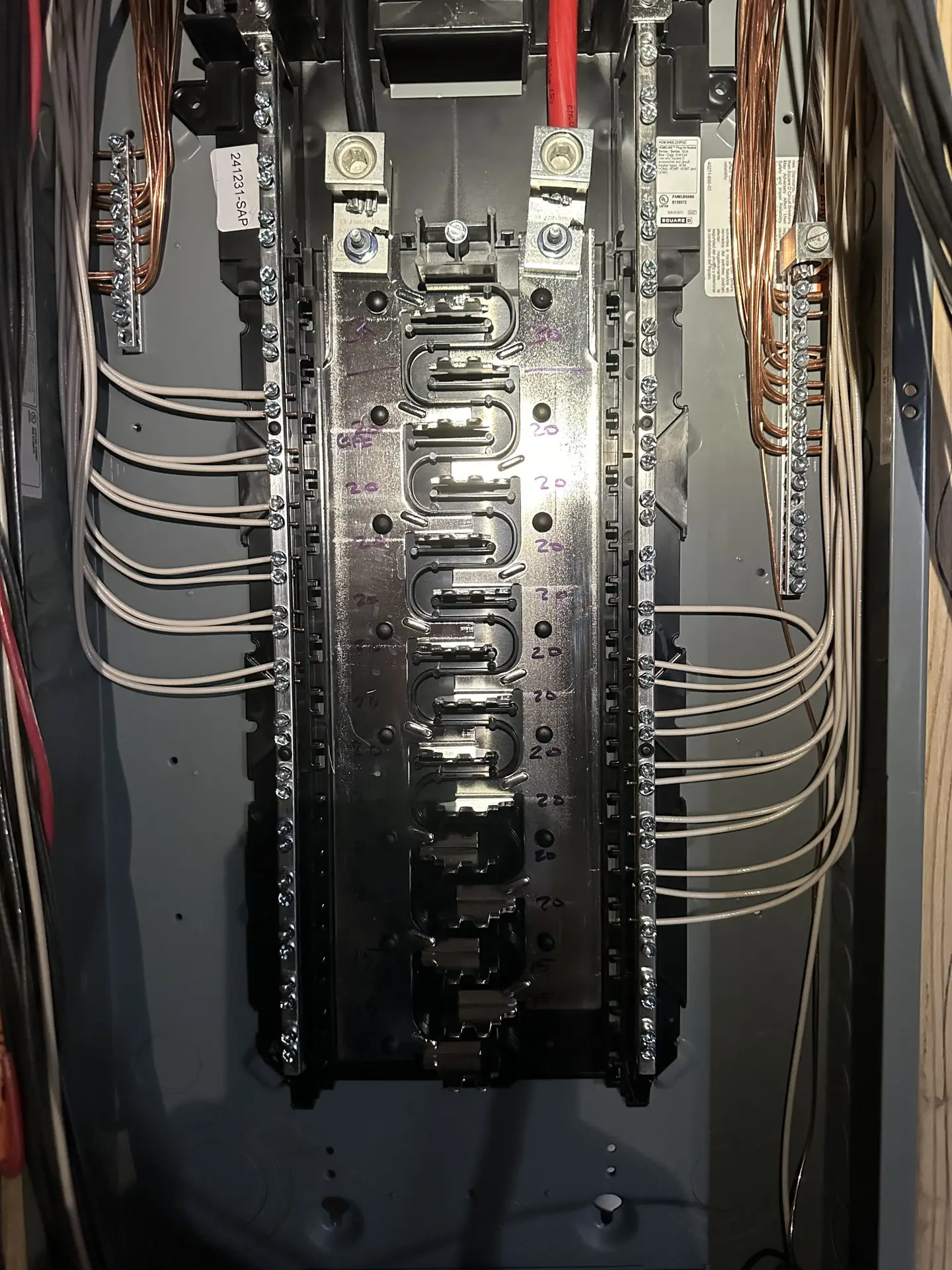
The common surprise is panel capacity. A homeowner buys a hot tub, we come look at the install, and the main panel is already pulling 85-90% of 100A at peak summer load — AC compressor, dryer, range, water heater all competing. Dropping another 50A circuit on top of that doesn't work. The honest answer in that case is often a panel upgrade to 200A as part of the hot tub install. We'd rather tell you that on day one than hit you with it after the tub is already in the driveway.
Standard 240V hot tubs — Jacuzzi, Sundance, Caldera, Bullfrog, Hot Spring, and most other brands over 110V — need a dedicated 50A GFCI breaker, 6 AWG copper wire (or 4 AWG for longer runs where voltage drop is a concern), and a hardwired connection into the tub's control pack. The GFCI protection on these circuits is non-negotiable per NEC 680 — a regular 50A breaker will not pass inspection. Smaller 120V plug-in tubs (the inflatable kind, or small hard-shell units marketed as "plug-and-play") just need a dedicated 15A or 20A GFCI outlet, which is a much simpler scope.
Bonding is the step most unlicensed installs miss, and it's where inspectors fail more hot tub jobs than anywhere else. NEC 680.26 requires an equipotential bonding grid connecting all metal parts within five feet of the tub — the tub shell's bonding lug, any metal handrails or ladders, metal deck framework, metal fencing, metal gas pipe within the perimeter — all tied together with 8 AWG solid copper. The point is that if any one metal object goes to a different voltage potential than the others (lightning, nearby fault, induced current), it can't shock a person touching two things at once. This isn't optional. We bond everything.
Caddis is Tyler Thorn's family-run shop out of Springville. On hot tub jobs we walk the backyard first — tub placement, panel distance, bonding path, disconnect location, decking considerations — and quote firm after that walkthrough. If the panel needs an upgrade, we'll say so up front. If the backyard needs a utility trench for the circuit run, we'll flag the digging scope separately. Nobody gets a surprise call the day of install.
Signs it’s time.
You just bought a hot tub
Most dealers deliver on a tight window and expect electrical to already be in place. The sooner we walk the site, the smoother delivery day goes.
You bought the tub but your panel is at capacity
A 50A hot tub circuit on a 100A panel with existing AC, dryer, and range is usually not possible. We run a load calc first and recommend a panel upgrade if needed — before the tub shows up.
You have an existing tub but failed an inspection or insurance review
Common findings: no GFCI, no equipotential bond, disconnect too close to the water, no permit on file. We remediate per current NEC 680 and get it signed off.
You're moving an existing tub to a new spot
Relocating a tub usually means a new circuit run, a new disconnect, and sometimes new bonding (if the new spot has different metal nearby). We handle the full redo per code at the new location.
Our process, step by step.
No mystery, no sales games. Here’s exactly what happens from the first phone call to the final inspection.
Site walk and load calculation
First visit, we walk the backyard — where the tub will sit, where the panel is, what the circuit route looks like (above-ground conduit, under-deck, trench), and what metal is in the bonding perimeter. We open the panel, inventory existing loads, and run an NEC 220 load calc to confirm there's headroom for a 50A circuit.
Confirm tub spec and manufacturer requirements
Every hot tub manufacturer publishes an electrical requirements page in the install manual — minimum circuit size, GFCI requirements, disconnect specs, bonding instructions. We work off that page, not off a generic template. If you don't have the manual yet, we'll pull the spec sheet from the manufacturer's website.
Firm written quote
You get a line-item quote covering the dedicated 50A GFCI breaker, wire run (gauge sized to distance), disconnect box and installation, bonding grid, permit, and inspection. If a panel upgrade is required to carry the new load, that's broken out so you see both pieces separately.
Pull the permit
We submit the electrical permit with your city or county — Springville, Provo, Alpine, Sandy, Draper, Heber, wherever you are. Residential hot tub permits typically turn around in a few business days. We handle the paperwork; you don't deal with the city.
Run the circuit and install the disconnect
We land the new 50A GFCI breaker in your panel, run the circuit (THHN in conduit, or UF cable if we're trenching, sized to distance for voltage drop), and install the disconnect box within line of sight of the tub, five feet or more from the water, mounted to code height.
Install the equipotential bonding grid
We bond the tub shell's bonding lug, any metal handrails or ladders, metal deck framework within five feet, metal fencing within five feet, and gas piping within the perimeter — all tied together with 8 AWG solid copper per NEC 680.26. This is the step most DIY and unlicensed jobs skip, and it's the one inspectors fail hot tubs on most.
Terminate at the tub and inspection
Once the tub is set in place (usually by the dealer's delivery crew), we come back for final termination — wiring the circuit into the tub's control pack per the manufacturer's manual. City inspector verifies GFCI protection, bonding, disconnect placement, and the install overall. We're on-site for the inspection so any questions get answered immediately. Then we fill, power up, and walk you through the controls.
Our scope for this job.
- Load calculation on your existing panel per NEC 220 to verify capacity for the new load
- Dedicated 50A GFCI breaker and 6 AWG copper circuit (or 4 AWG for long runs)
- Hot tub disconnect box installed within line of sight, 5-10 feet from the tub per NEC 680
- Equipotential bonding grid per NEC 680.26 — tub shell, handrails, ladders, metal deck, gas pipe
- Hardwired connection into the tub's control pack per the manufacturer's installation manual
- Permit pulled with your city or county, inspection scheduled and attended
- If needed, panel upgrade coordination so the tub can actually run
What people ask about hot tubs.
Do I need a permit for a hot tub install?
For any 240V hardwired hot tub, yes — every city in our service area requires an electrical permit and inspection. For a 120V plug-in inflatable tub that just uses a dedicated GFCI outlet, some jurisdictions require a permit for the outlet install (if we're adding a new circuit) and some don't. We'll tell you which bucket you're in before quoting.
What size circuit does my hot tub need?
Most 240V residential hot tubs — Jacuzzi, Sundance, Caldera, Bullfrog, Hot Spring, Marquis — need a 50A GFCI circuit. A few larger therapy spas and swim spas need 60A. Smaller 120V plug-in tubs (inflatable or small hard-shell) typically need a dedicated 15A or 20A GFCI outlet. The number you want is on the tub's installation manual under "minimum circuit size" — that's what we size to.
Why does the disconnect have to be five feet from the tub?
NEC 680.12 and 680.13 require the disconnect to be within sight of the tub (so someone working on the tub can see it's off) but at least five feet horizontally from the inside wall of the tub, so you can't reach the disconnect while standing in the water. It's a safety separation — the whole point is that the disconnect handle is accessible to a service person but not to someone in the water.
What's bonding and why does my tub need it?
Bonding ties all the metal parts within five feet of the tub to the same ground reference — tub shell, handrails, metal ladder, metal deck framework, gas pipe, anything metal. If any one of those gets energized (lightning, nearby ground fault, induced current), bonding means they all go to the same voltage at the same time, which prevents a person touching two of them at once from completing a circuit. NEC 680.26 requires it. Without it, inspectors fail the install, and we've never seen one leave it as optional.
What does a hot tub circuit install cost?
It depends on the distance from your panel to the tub location, whether we're trenching across a yard or running conduit along a fence or deck, whether your panel has capacity (or needs an upgrade), and how much metal is in the bonding perimeter. We walk the site, run the load calc, and give you a firm quote broken out by line — circuit, disconnect, bonding, permit, inspection.
My panel is a 100A — can I still get a hot tub?
Sometimes, depending on your other loads. If you have gas appliances (gas range, gas dryer, gas water heater, gas furnace) and don't run central AC heavily, a 50A hot tub can often fit on a 100A service after a load calculation. If you have electric range, electric dryer, electric water heater, and heavy summer AC load, the load calc almost always shows you need a 200A upgrade first. We run the real numbers before we quote.
Can I run the hot tub circuit myself and have you just do the final hookup?
Honestly, we don't recommend it on a hot tub — too much liability and too many ways to fail inspection. GFCI breaker selection, proper wire sizing for voltage drop, correct disconnect placement, bonding grid, and permit documentation all have to line up. We've been called in to fix enough DIY hot tub jobs that it's cheaper and faster to have us do the whole thing from the start. For a 120V plug-in inflatable tub needing just a GFCI outlet, DIY is more reasonable if you've done outlet work before.
What's the difference between a 120V plug-in tub and a 240V hardwired tub?
A 120V plug-in tub (inflatable Intex and Coleman tubs, plus some small Lifesmart and AquaRest hard-shell units) plugs into a standard GFCI outlet and draws about 1500W — one circuit, one outlet, nothing fancy. A 240V hardwired tub (basically every real spa — Jacuzzi, Sundance, Hot Spring, Caldera, Bullfrog) is hardwired into a dedicated 50A GFCI circuit through a disconnect, and the heater and jets can run simultaneously. 240V tubs heat faster, hold temperature better, and have way more jet power — but they also need the full electrical install we're talking about.
How long does the electrical take, start to finish?
From signed quote to a running circuit is usually one to three weeks, driven mostly by permit lead time and your panel's starting condition. The actual on-site work is typically one to two days — one day if the panel has capacity and the run is simple, two days if we're adding trench or doing a panel upgrade alongside. We give you a schedule when we quote so your tub delivery doesn't collide with electrical.
Does the install come with a warranty?
Our workmanship is warrantied for the long haul — if a connection we made loosens, the GFCI breaker we installed fails prematurely, or the bonding grid we installed develops a problem, we come back and fix it. The hot tub itself has its own manufacturer warranty from your dealer. We also hand you the permit paperwork and inspection sign-off at closeout, which is what your homeowner's insurance may ask for if they ever want documentation.
We serve Salt Lake County, Utah County, Wasatch County, Davis County from our Springville base. See all service areas →
Other things we handle.

Need an electrician for your Utah home?
Panel upgrades, EV chargers, generators, aluminum wiring, remodels, and everything in between — from a licensed, family-run team that takes the time to explain what we’re doing.